Automate CPS Security Compliance Prep, No Spreadsheets Required
The Claroty Team
/July 7th, 2026/
5 min read
Maintaining and proving a compliant state currently consumes weeks of manual, exhausting work for security, engineering, and governance, risk, and compliance (GRC) teams alike, especially in critical infrastructure environments heavy in cyber-physical systems (CPS) assets. Regulators, meanwhile, have ramped up their interest in the oversight of protecting such assets from cyberattacks since they play a critical role in keeping utilities, hospitals, and supply chains up and running.
Mandatory security frameworks such as NERC CIP and ISA/IEC 62443 are as mature as many of the assets they were developed to secure. Yet internet connectivity and advanced technologies such as AI have introduced new complexity into protecting these assets from threat actors. Not only is it harder to keep devices secure and compliant, but the fines associated with being non-compliant are materially impactful like never before.
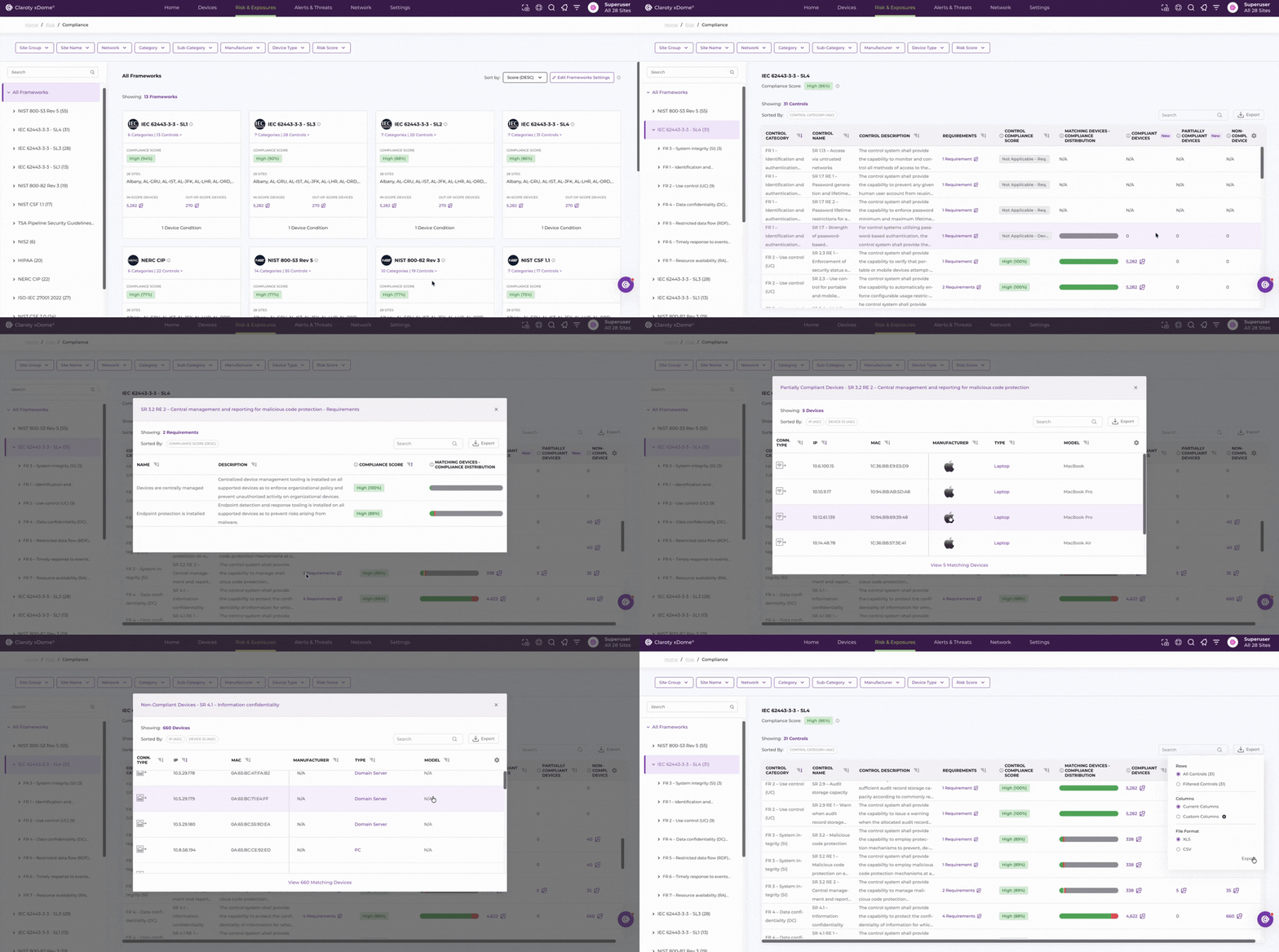
Claroty has introduced CPS Compliance Mapping into its xDome platform hoping to ease some of the complexity around compliance. The new feature consumes asset telemetry collected by the platform to provide a current state of compliance related to CPS assets and enabled frameworks.
Why is CPS Compliance Reporting So Painful?
Compliance complications are ultimately a translation problem.
GRC teams speak in control numbers. They outline overarching compliance mandates and pass out assignments to the relevant asset owners. They are ultimately accountable for passing the audit, but they don't own the technical systems that need to be secured.
Security teams speak in CVEs, exposures, and threats. For vulnerability controls, they map out devices with security flaws (thousands of them) and hand engineers a spreadsheet of raw IP addresses and patch numbers.
Engineers speak in protocols and availability. They focus on physical processes and uptime, not compliance jargon. They cannot simply take a critical PLC offline for a firmware patch. Out of options, they end up trying to map 20-year-old legacy assets to the framework requirements using a spreadsheet titled Compliance_Log_v4_FINAL_FINAL2.xlsx.
The result? Weeks of overlapping efforts, data siloes, and a point-in-time fire drill every time an audit approaches.
How Claroty xDome Automates CPS Compliance Mapping
xDome eliminates the spreadsheet shuffle by building CPS Compliance Mapping directly into the asset lifecycle. Rather than relying on manual queries, xDome continuously applies logical rules across your environment. It utilizes live, native platform telemetry, such as device attributes, threat alerts, MDS2 documents, and vulnerabilities, to automatically calculate compliance statuses across all enabled frameworks
Most importantly, this gives all teams involved a shared language to understand the state of compliance. No queries, no spreadsheets—100% native and automated.
Security teams get a live list of devices that need to meet certain requirements. xDome can tell them the required actions to patch certain devices or provide segmentation policies that add accepted compensating controls.
Engineers get a sanity-saver, ditching their spreadsheets and clipboards for a live list of devices that need attention.
GRC teams can see or get an export of their compliance percentage from the framework level all the way to each requirement per control.
But how does it work exactly? We built a rules engine into xDome that understands the control requirements and maps them to xDome’s language of CPS protection. Device attributes, network alerts, MDS2 data, vulnerability information, etc. – all this intelligence that xDome provides about your CPS security posture – is mapped to controls.
This impacts several compliance-related workflows:
TASK
THE MANUAL WAY
THE XDOME WAY
Audit Preparation
Weeks of manual data collection, interviewing site managers, exporting CSVs, and cross-referencing asset inventories against framework PDFs.
Filter by the specific framework (e.g., NIS2) and export the generated report. Now you have the bulk of the work required for audit prep to show how your devices align to relevant security controls.
Remediation & Patching
Staring at a list of 5,000 "Critical" vulnerabilities and guessing which ones actually matters to an auditor.
Filter by "Non-Compliant" assets under a critical requirement (e.g., Devices are patched), and asset owners see a clear list of devices requiring action. xDome also gives users recommended actions for securing those devices, which can cover the compliance requirements.
Change Management
A new device is added to the plant floor, and nobody realizes it lacks proper security configurations until the next annual audit.
The new asset will be added to the mapped compliance frameworks and listed as non-compliant, enabling real-time correction.
The time and headaches saved through this automation will make life easier for many security analysts and engineers.
It also translates one more bonus layer for these user groups: The executive translator.
Chief risk officers can rest easier seeing real-time compliance percentages tied directly to their organization's most consequential regulations.
CISOs can ditch the guesswork and confidently allocate limited remediation resources to the exact control changes needed to pass an upcoming audit.
Plant managers can automatically prove to leadership that their local engineering teams have kept physical assets in a safe, compliant standing.
CPS Security Compliance Without Panic
Whether you deal with annual, monthly, or weekly audit cycles, compliance shouldn't mean halting operations to parse data. With Claroty xDome, continuous, automated compliance mapping protects both operational uptime and global revenue. Ready to turn weeks of manual audit prep into a two-click report?